Is the Book of Revelation Only about the Future?

For some, studying Revelation can become a mere mental exercise, void of life application.  They simply speculate over the meaning of the book’s mysterious symbols—all without necessarily considering what it calls them to do.

Of course, Revelation does challenge the mind. Scholars who devote their lives to studying it will never figure out every detail. Nonetheless, like all Scripture, Revelation is intensely practical. And one unmistakable theme is the need for believers in Christ to persevere in their faith and obedience. In fact, the book teaches that the only true believers are those whose faith endures through trials and challenges. Consider the plentiful references to perseverance:

  • The Apostle John tells the Christians in Smyrna to “be faithful unto death,” for only then will they receive the “crown of life” (Revelation 2:10).
  • The church in Thyatira is told to “hold fast” and that the one “who keeps [Christ’s] works until the end” will receive “authority over the nations” (Revelation 2:25-26).
  • In chapter 7, the multitude in heaven is comprised of those who endured in faith through “the great tribulation” (Revelation 7:14).
  • Chapter 13 issues “a call for the endurance and faith of the saints” (Revelation 13:10), which is echoed in the subsequent chapter, where John adds that the redeemed are those who refuse to defile themselves with sin and who “follow the Lamb wherever he goes” (Revelation 14:4).
  • The final chapter exhorts the righteous to continue doing right and the holy to continue the pursuit of holiness (Revelation 22:11).

Such calls to perseverance make it abundantly clear that Revelation is not just a book about the future, but about how to live in the present.

(Note:  This article is presented within The Biblical Story Course as an Insight under Books of the Bible, Perseverance in Revelation). 


What Did Jesus Teach about the Bible?

It’s relatively common to encounter professed Christians who say they love the Bible but don’t think it’s entirely true. This has occurred famously in church history, as when Karl Barth wrote that “arithmetical errors, whimsies and impossibilities may have crept in” to the Bible and that the authors of Scripture were “guilty of error in their spoken and written word.” But such dismissal of the Bible occurs among believers today too, as when someone told me at a recent church function that belief in the Bible’s complete truthfulness is not regarded as a “serious academic position” at the Christian college where he works.

In response to such claims (as American theologian Carl Henry reminded us), it’s worth taking a look at what Jesus taught about the Bible. First, He said nothing could invalidate the truth of the Old Testament. Most of the time the Greek verb luo means “to free” or “to loose.” But four times in the Gospels, Jesus used it to reference the Old Testament, giving it the more technical meaning “to invalidate.” For example, He said that “whoever relaxes (or invalidates) one of the least of these commandments and teaches other to do the same will be called least in the kingdom of heaven” (Matthew 5:19). For Jesus, no one had the right to say the Old Testament was in error.

Jesus also said Old Testament Scripture was more authoritative than any religious tradition, as when He told the Pharisees in Mark 7:9, “You have a fine way of rejecting the commandment of God in order to establish your tradition.” And in the Sermon on the Mount, He elevated Scripture above Jewish traditions on matters like adultery and divorce.

But Jesus didn’t only hold up the Old Testament as truthful and authoritative; He claimed that His own teaching was as authoritative as the Old Testament. A trademark of His earthly ministry was to use the phrase “I say to you” to introduce His teaching as sure and binding (e.g., Matthew 5:22, 28, 32, 34, 39, 44). And in the conclusion to the Sermon on the Mount, He compared His teaching to a rock that could not be moved by the storms of life (Matthew 7:24-27).

Then, at the end of His earthly ministry, Jesus promised to deliver future authoritative teaching through His apostles. The Holy Spirit would “teach [them] all things and bring to [their] remembrance” all that He said (John 14:36). As promised, when the apostles wrote New Testament books, they claimed the authority of Jesus. Revelation, for instance, though written by John, calls itself “the revelation of Jesus Christ” (Revelation 1:1).

Much more could be said about the Bible’s authority and truthfulness. But in the teachings of Jesus we find a validation of the Old Testament, of His own teachings, and of the New Testament books written by His apostles. This alone is enough to remind us that something is amiss when Christ’s supposed followers claim that errors have crept into Scripture.


Should We Interpret a Bible Verse Literally or Figuratively?

It depends on context. A person’s soul is in peril if he thinks Jesus was using poetic exaggeration when He said, “I am the way, and the truth, and the life. No one comes to the Father except through me” (John 14:6). On the other hand, a Bible reader might maim himself unnecessarily if he fails to recognize the hyperbole in Jesus’ statement that we should cut off our hands and gouge out our eyes to avoid sin (Matthew 5:29-30). Like all people who have ever spoken or written, biblical authors use different styles of communication at different times.

Of course, everything the Bible affirms is true, regardless of its literary genre. Still, every time we open our Bibles, we must determine what style of communication is being used and read accordingly. As a primer, here are a few of the literary styles used in Scripture and some rules for interpreting them taken from Robert Stein’s helpful book, A Basic Guide to Interpreting the Bible.

Historical narrative recounts events and is meant to be understood literally – not as fable. In this vein, Article XIII of the Chicago Statement on Biblical Hermeneutics insists that literary techniques not be used to evade historical accounts.[i] For instance, some scholars have tried to fictionalize the story of Jonah and the Fish, but Christ treats Jonah as a real person in Matthew 12:40-42, and so should we. More than 40 percent of the Old Testament and nearly 60 percent of the New is historical narrative, including much of the material in the Gospels and Acts.

Songs and poetry are geared toward evoking emotion rather than speaking with scientific accuracy. With biblical poetry, the reader must determine the author’s message without misconstruing symbolism as narrative description. For example, the song in Exodus 15 poetically describes Pharaoh’s army as being “thrown into the [Red] sea” (15:1) even though it actually followed the Israelites through the parted waters before God sent them crashing back down.

–Proverbs are pithy sayings that express general truths or rules of thumb; they don’t convey ironclad guarantees. A classic example is Proverbs 22:6, “Train up a child in the way he should go; even when he is old he will not depart from it.” While parental training generally sets the course for a child’s life, there are exceptions. (See BibleMesh blog article, “Is Proverbs 22:6 a guarantee?”)

Parables are fictional stories that illustrate spiritual points. Generally, a parable teaches one basic point and is not intended as an extended comparison in which every detail has spiritual significance. About a third of Jesus’ teachings are in parables, including the story of the sower and soils in Luke 8 and the lost sheep in Luke 15.

Idioms are expressions with meanings not derived from the normal meanings of the words in them. In modern English, our idioms include “raining cats and dogs” and “kick the bucket.” In the Bible you will find idioms like “their hearts melted” to describe a loss of courage and “the apple of His eye” to describe being precious in God’s sight.

The list could go on, but you get the idea. Unless we know what style of communication a biblical author is using and how to interpret it, we may wonder if archaeologists have ever found the tombs of the Good Samaritan and the Prodigal Son.


[i] Chicago Statement on Biblical Hermeneutics, with commentary by Norm Geisler http://www.bible-researcher.com/chicago2.html


Did the Jews Corrupt the Old Testament to Slight Mohammed?

Muslim scholars say that the Torah (the first five books of the Bible), the Psalms, and the gospel message found in the New Testament are from God. But there’s a catch: By their account, these writings have been corrupted, so the Koran is necessary to set the record straight.[i] One big “problem” with the Christian Bible is that is declares Jesus to be the Son of God. Another is that those “treacherous” Jews have deleted Old Testament passages predicting Mohammed’s appearance, an offense suggested in a Koranic passage which reads, “Who is more unjust than those who conceal the testimony they have from Allah?” (2:140)

However, in their haste to scrub the Torah clean of Mohammed-anticipating passages, the Jews somehow overlooked Deuteronomy 2:18-15, which reads “The Lord said to [Moses]: “… I will raise up for them a prophet like you from among their brothers; I will put my words in his mouth, and he will tell them everything I command Him.” Though Christians have correctly taken this to refer to Jesus, the Muslims are confident it points to Mohammed. Of course, their confidence is based on “eisegesis” (reading what you want into the text) instead of “exegesis” (unpacking what’s in the text, in its true context).

Furthermore, Muslims who speak expansively of Bible corruption have no idea what they’re getting into, for there is no more exacting discipline among Christian scholars than “textual criticism.” Centuries of painstaking and fastidious research have gone into establishing which manuscripts – whether on papyrus, vellum, parchment, or paper; whether in scroll or codex (book) form – are truer to the “original autographs” (the first handwritten versions) of the various biblical passages.

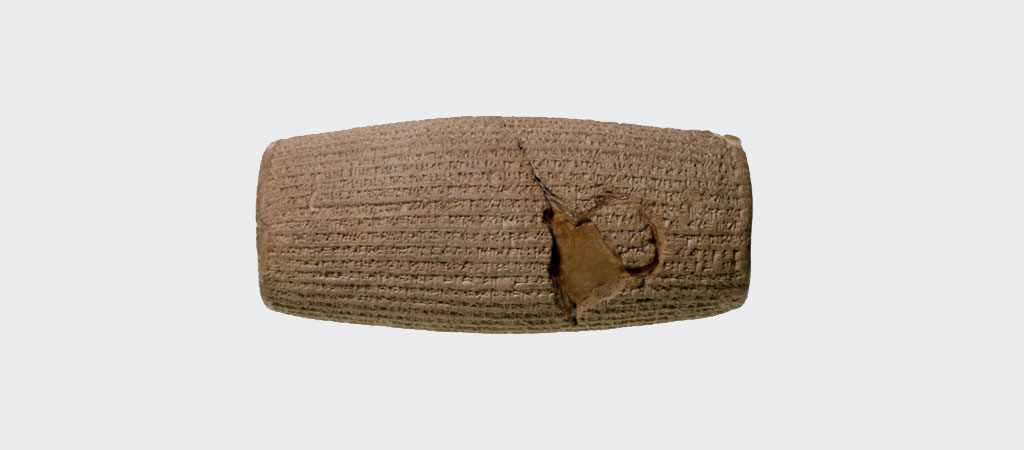
Consider, for instance, the “critical apparatus” (footnotes) for the above-mentioned Deuteronomy 18:15-18, as found in the standard Hebrew text, Biblia Hebraica Stuttgartensia.[ii]  Examination reveals careful comparisons of the printed Hebrew with such ancient sources as a 13th-century AD parchment in the British Museum;[iii] Origen’s 3rd-century AD construal of the Septuagint, the Greek translation of the Old Testament, begun in the third century BC; and the Dead Sea Scrolls, Old Testament parchment manuscripts copied by the Jewish Essene sect over a century before Jesus’ birth.  The discovery of these scrolls between 1947 and 1956 showed a near-perfect match with the historic Masoretic text of the Old Testament, prepared roughly a thousand years later.

The literature on textual variants comes down to adjudicating between such differences as a Hebrew manuscript which construes Genesis 1:28 to say, “over the cattle, and over all the earth” and a Syriac (Aramaic) manuscript, which reads, “over the cattle, and over all the wild animals of the earth.” And again, between a Hebrew version of Isaiah 2:12 (“against all that is lifted up and low”) and a Greek version (“against all that is high and towering, and they shall be brought low”).[iv] In short, those familiar with the rigor of such scholarship are disinclined to think that uncomfortably-pro-Muslim passages have been deleted without wide detection and opposition within the professorial community.

Furthermore, if Jewish scholars were about the business of erasing troublesome passages, why did they leave in the awkward talk of a brutalized Messiah in Psalm 22 and Isaiah 53 (passages which “play into Christian hands”) and embarrassing descriptions of Noah’s post-Flood drunkenness and Abraham’s mendacity in Egyptian and Philistine courts? And if the deletions were supposed to have occurred before Mohammed’s appearance, how could the rabbis have sufficiently anticipated “The Prophet” to launch a pre-emptive strike against him? Such problems make claims of anti-Muslim editing untenable – and underscore the integrity of traditional biblical scholarship, which strives to let the Bible speak without interference from those who would tinker with the text to serve their agendas.


[i] A standard reference for Muslims accusing the Bible of corruption is the work by the French convert to Islam, Dr. Maurice Bucaille, The Bible, The Qur’an and Science (American Trust Publications, 1977). A full pdf version is available online at  http://ia600504.us.archive.org/18/items/TheBibletheQuranScienceByDr.mauriceBucaille/
TheBibletheQuranScienceByDr.mauriceBucaille.pdf (accessed April 13, 2013).  See also a video posted on YouTube entitled “100% Proof That Bible Is Corrupted in a Minute!” http://www.youtube.com/watch?v=FnlLVCMI5bU (accessed April 13, 2013), and the Kairos Journal booklet, Israel and Legitimacy: Modern Achievement vs. Islamic Prejudice, p. 4-5.

[ii] Biblia Hebraica Stuttgartensia, edited by A. Alt, O. Eissfeldt, P. Kahle, and R. Kittel (Stuttgart: Deutsche Bibelstiftung, 1976), 319.

[iii] Number 107” from 18th-century Hebraist Benjamin Kennicott’s collection

[iv] Anthony Campbell, “Preparatory Issues in Approaching Bible Texts,” The Blackwell Companion to the Bible (Oxford: Blackwell, 2001), 6.

What Is Passion Week?

(Note:  This is a portion of an article on Passion Week that is presented within The Biblical Story Course under ERA 6: Jesus, lesson 31).

Summary
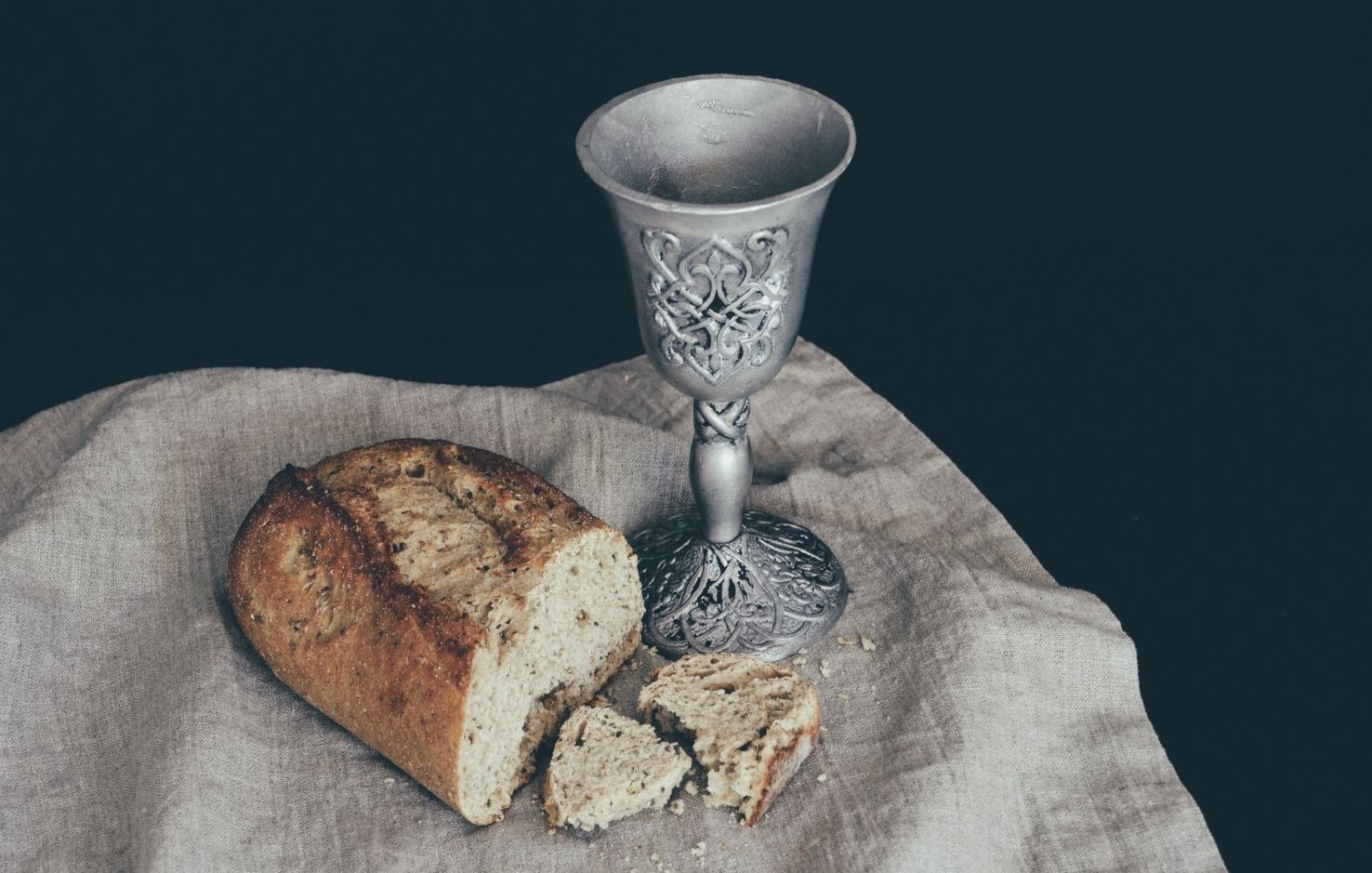
The week of Jesus’ crucifixion is called “Passion Week,” after the Greek verb, “to suffer,” pascho. It began with His triumphal, popularly acclaimed entry into Jerusalem, and it culminated in His atoning death on the cross, His burial, and His resurrection. Today, the Church around the world celebrates those crucial days, now called “Holy Week.” Its sequence of observances outlines the events of that occasion: Palm Sunday, when the enthusiastic multitudes placed palm branches on the way as He rode into Jerusalem; Holy Monday, when Jesus cleansed the Temple of moneychangers; Holy Tuesday, when Jesus disputed with the Pharisees and later, while on the Mount of Olives, taught His disciples about future events; Holy Wednesday (also called Great Wednesday and Spy Wednesday), when Judas Iscariot made his treacherous arrangement with the chief priests; Maundy (“Commandment”) or Holy Thursday, when, after the Last Supper (where He washed their feet), and just before His arrest, He gave His disciples a “new commandment,” to love one another; Good Friday, when, at the urging of Jewish leaders and the command of the Roman ruler Pilate, He was crucified (with His enemies’ falsely charging Him with blasphemy and sedition, but with God’s turning their gross injustice into the great saving act of history); Holy Saturday, when He lay in the grave. Then, after “Suffering Week” comes Easter Sunday, when Jesus rose from the grave.

Connections
Many of Christ’s Passion Week actions and experiences fulfilled Scripture: He rode on a young colt in humility (Matthew 21:1-5; Zechariah 9:9); He cleansed and judged the Temple (Matthew 21:12-13; Malachi 3:1-3); He faced accusations with silence (Matthew 26:63; Isaiah 53:7); He was scorned and mocked in His suffering (Matthew 27:39-44; Psalms 22:6-8); and He died among the wicked and was buried in the grave of a rich man (Matthew 27:57-60; Isaiah 53:9)

BibleMesh
The enormous significance of Passion Week’s is seen in the space given to it by the Gospel writers. Most notably, eight of John’s 21 chapters (one third of the book) are devoted to that single week, though Jesus lived 33 years and gave three years to public ministry. In Luke, five of 24 chapters (one fifth of the book) focus on the week.

Passion Week is the central event of the Bible. In Genesis 3:15, God predicted that the seed of the woman (Jesus) would bruise the head of the serpent (Satan) – a foreshadowing of Christ’s death and resurrection. The prophets foretold the Passion in more vivid detail, describing the Lord as a sacrificial lamb (Isaiah 52:13, Isaiah 53:12). Jesus Himself explained that His death was His purpose in coming to earth (Matthew 20:28), and He called His followers to “take up their own crosses daily” in sacrificial service (Luke 9:23). The apostles echoed this call when they commended the “crucified life” to their hearers (Galatians 2:20).

Quick-Take Video on Passion Week
Dr. Garry Williams, director of London Theological Seminary’s John Owen Centre, provides a brief teaching video on the events of Passion Week.